Taken from The Primrose Hackle: Annual Newsletter of The Lorne Scots (Peel, Dufferin, and Halton Regiment), 2021
This is a question I have been asked many times. It is not a simple answer, it is a weaving shuttle, which seems simple enough, but why is the hard part. It seems to be a very odd thing to see on a military cap badge. Many members of the Regiment will spend their entire careers not understanding the true symbolism behind the things they wear, which is unfortunate, because in the 21st century, there are many more things that we see, that we don’t realize how old they are, or how many different things they have come to symbolize.
Heraldry is an ancient art, but it has been on the battlefield in some form from Hastings to Agincourt, from the Somme to Op Medusa in some shape or form. It originated in the 12th century as a way to identify knights completely covered in armour on the battlefield and to identify different knights in the joust. Commonwealth military heraldry is unique in the sense that it is not limited to designs such as a shield, helmet, and crest. It also does not pass down from father to son (and now father to daughter, mother to son, etc in Canada, after the introduction of the Canadian Charter of Rights and Freedoms) from generation to generation. I will not go too deep into the art and science of heraldry here and I will translate the blazons, that is the description of arms and badges, which is written in a combination of traditional Norman-French and mediaeval English words written in, for lack of better terms, English, although difficult to understand, this is the language of heraldry.
The Lorne Scots are the amalgamation of two regiments, The Lorne Rifles (Scottish), and The Peel and Dufferin Regiment. Both of these regiments contributed to the cap badge and other regimental symbols of The Lorne Scots. The majority of the Regiments symbols come from the arms of two men, His Grace, Sir John Campbell, The Marquess of Lorne, 4th Governor General of Canada (later The 9th Duke of Argyll after the death of his father); and The Rt. Hon. Sir Robert Peel, Prime Minister of The United Kingdom (1834-1835,1841-1846). The names of the Regiments give away their affiliation.
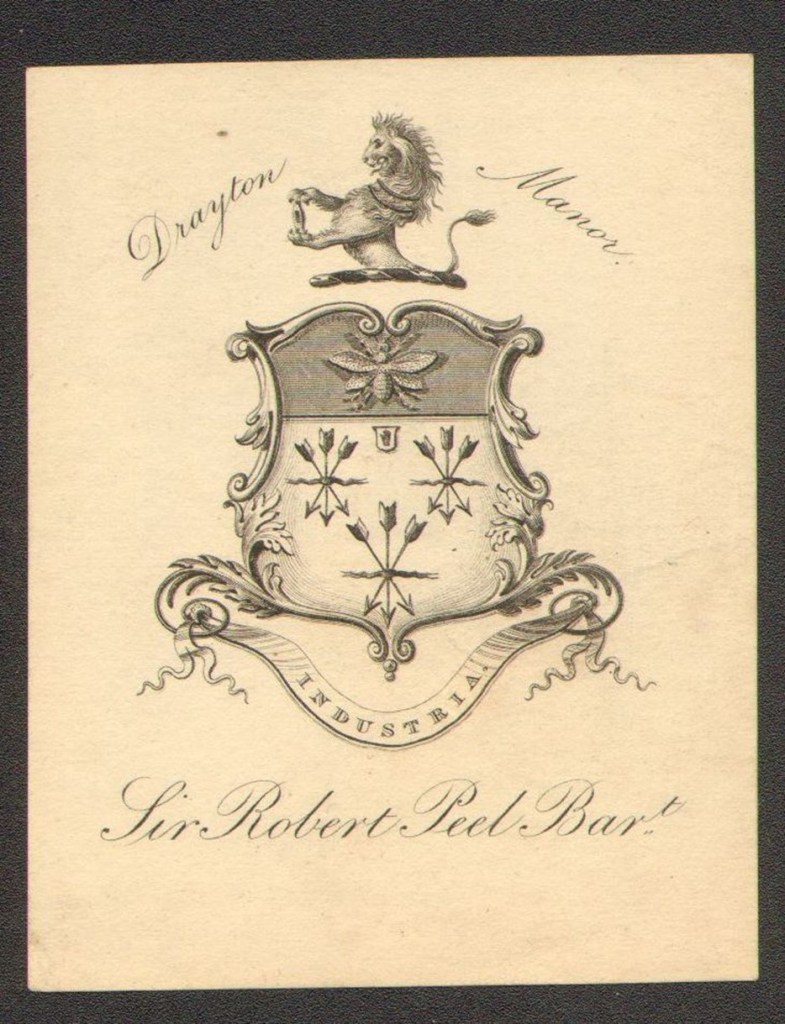
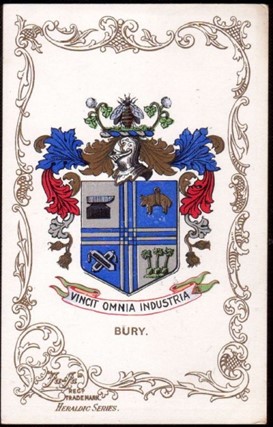
First to address the nagging question of what the lion has in its paws we look at the crest of Sir Robert Peel. Sir Robert Peel, 2nd Baronet was Prime Minister of the United Kingdom. He is remembered as the creator of the modern police force, the term bobbies (a British slang term for police officers) refers to him. Peel County was named after him in 1851. He was born in the town of Bury near the City of Manchester in Lancashire; the Regiment last visited this town in 2012. His crest was: A Demi-lion rampant Argent gorged with a Collar Azure charged with three Bezzants holding between the paws a Shuttle Or. Which in simple English is the upper half of a silver lion (this is referred to as a demi lion because the lower legs are not visible, however, it is often incorrectly called a lion rampart, which is a lion with one of its hind legs raised), with a blue-collar with three gold dots on it, holding a gold weaving shuttle. The shuttle is a weaver’s shuttle, which is found in the arms of many corporations in Lancashire, which was where Sir Robert Peel was born. The former arms of the County Borough of Bury (which was abolished in 1974, included two Argent (silver) shuttles in satire (crossed).
This crest with the addition of a motto would be the cap badge of The Peel and Dufferin Regiment. A weaver’s shuttle would be used with a loom to make garments. Sir Robert Peel, his father owned many spinning factories. The crest would traditionally sit on top of the helmet in a coat of arms, The Peel and Dufferin Regiment enlarged it and made it their cap badge, which The Lorne Scots continued. A torse or wreath was traditionally twisted strands of material used to hide the connection between the helmet and the crest. In this case, it is Argent (white) and Azure (blue). The torse was not included in the blazon of Sir Robert Peel’s crest, however Argent (white) and Azure (blue) are the primary colours of his arms, which as you can see did not contribute any further to the regiment. The purpose of the torse in this sense is presumably decorative and a way to explain the absence of the bottom half of the demi-lion. There is of course, no helmet for it to attach to.
The Lion is often a symbol of Scottish regiments, however, in our case, it comes from the English connection of Sir Robert Peel. The Regimental symbols that came from The Marquess of Lorne are much less remote, such as the Boars head, which was his crest, the tartan, the Galley of Lorne, and of course the regiments name. But those are a story for another day.
Charles Veale
December 11th, 2021
 My Corner of the Internet